
When Packaging Boxes Become Collectibles: The Emotional Logic and Technical Implementation of ACG Packaging
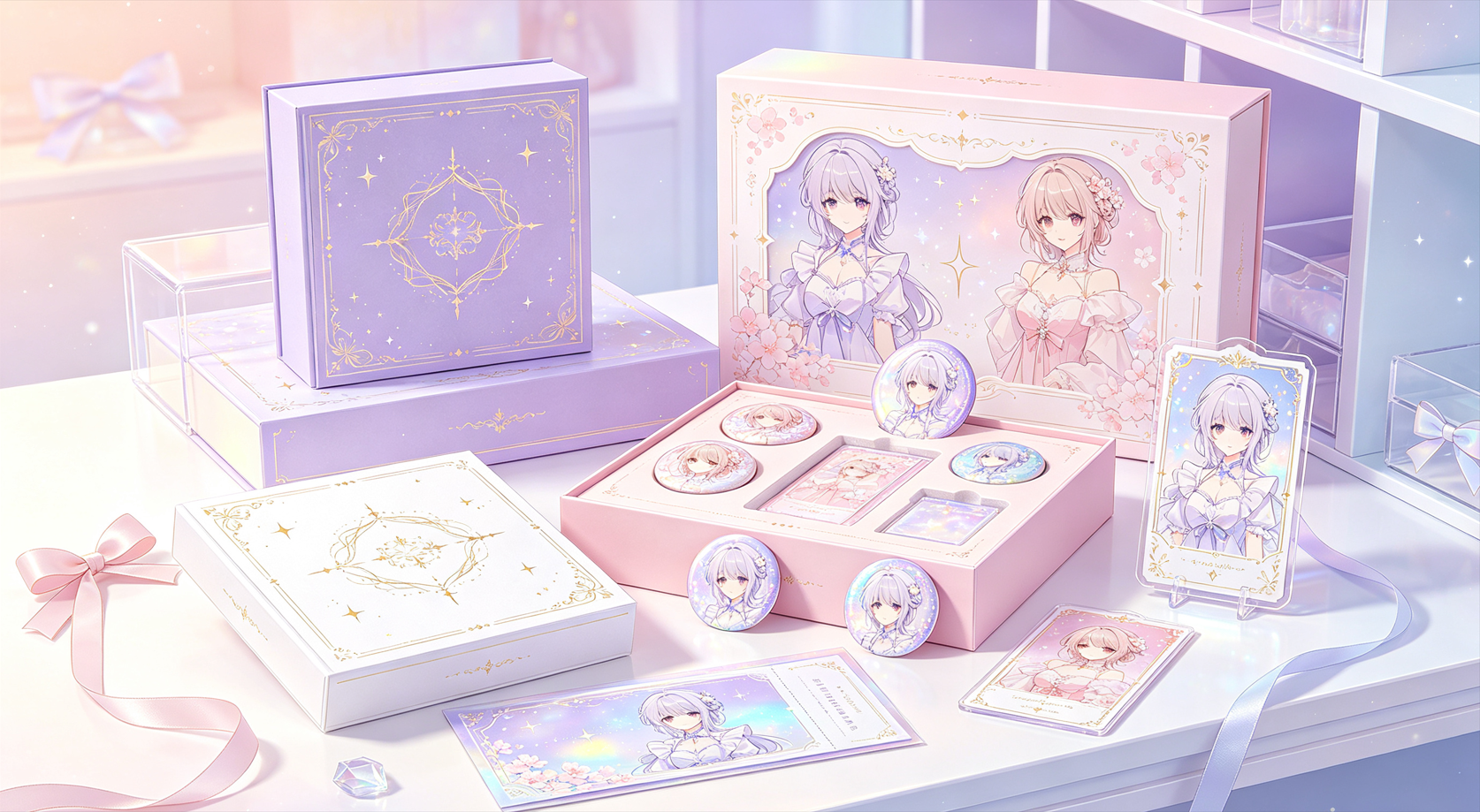
Following up on the previous issue's preview: from "disposable after use" to "can't bear to throw away," packaging is moving from a functional carrier to an emotional carrier. The "Packaging × ACG" crossover track deserves continued tracking. This issue provides an in-depth breakdown of the underlying logic, technical challenges, and industry misconceptions.
In our previous article, we observed an industry phenomenon: in the ACG merchandise consumption market, packaging boxes and paper bags are fully kept by users, upcycled through DIY modification, and even enter the secondhand market circulation. Ordinary product packaging is mostly discarded directly after being opened and the product removed; but ACG IP-derived packaging gains additional collectible value, emotional value, and social value.
Many manufacturers simply interpret this as "just make the box look good," but in reality, numerous projects run into contradictions: blindly piling on holographic and hot foil stamping processes causes defect rates to skyrocket in mass production; pursuing high aesthetics while neglecting protective functions leads to merchandise being scratched and damaged during shipping; wanting to adapt to overseas markets, yet gorgeous craft materials touch the red lines of EU PPWR and pEPR compliance. How to balance aesthetics, protection, compliance, and collectible value is the core educational focus of this issue.
I. Fundamental Understanding: Why ACG Users "Can't Bear to Throw Away the Packaging Box"
Value chain of ordinary packaging: Carry and protect product → Unbox → Discard
Complete value chain of ACG IP packaging: Protect product → Unboxing ritual experience → IP emotional continuity → Collection/DIY upcycling → Social sharing
Three Major Psychological Drivers
1. IP Emotional Extension
Packaging boxes, inner trays, and sleeves are all part of the IP worldview. Character illustrations, patterns, and themed color schemes on the box are not just decorative printing—they are carriers of the IP story. What users purchase is not just the physical badge or standee, but also this sense of character atmosphere, so they naturally don't want to discard the box.
2. Unboxing as Social Media
The pan-ACG user base is enormous, and a large number of users film unboxing short videos and post photos on social platforms. The packaging box is an important part of the visual. Design flaws and craftsmanship defects will be directly amplified during sharing; conversely, high-quality packaging will spontaneously generate free traffic.
3. Reuse Value
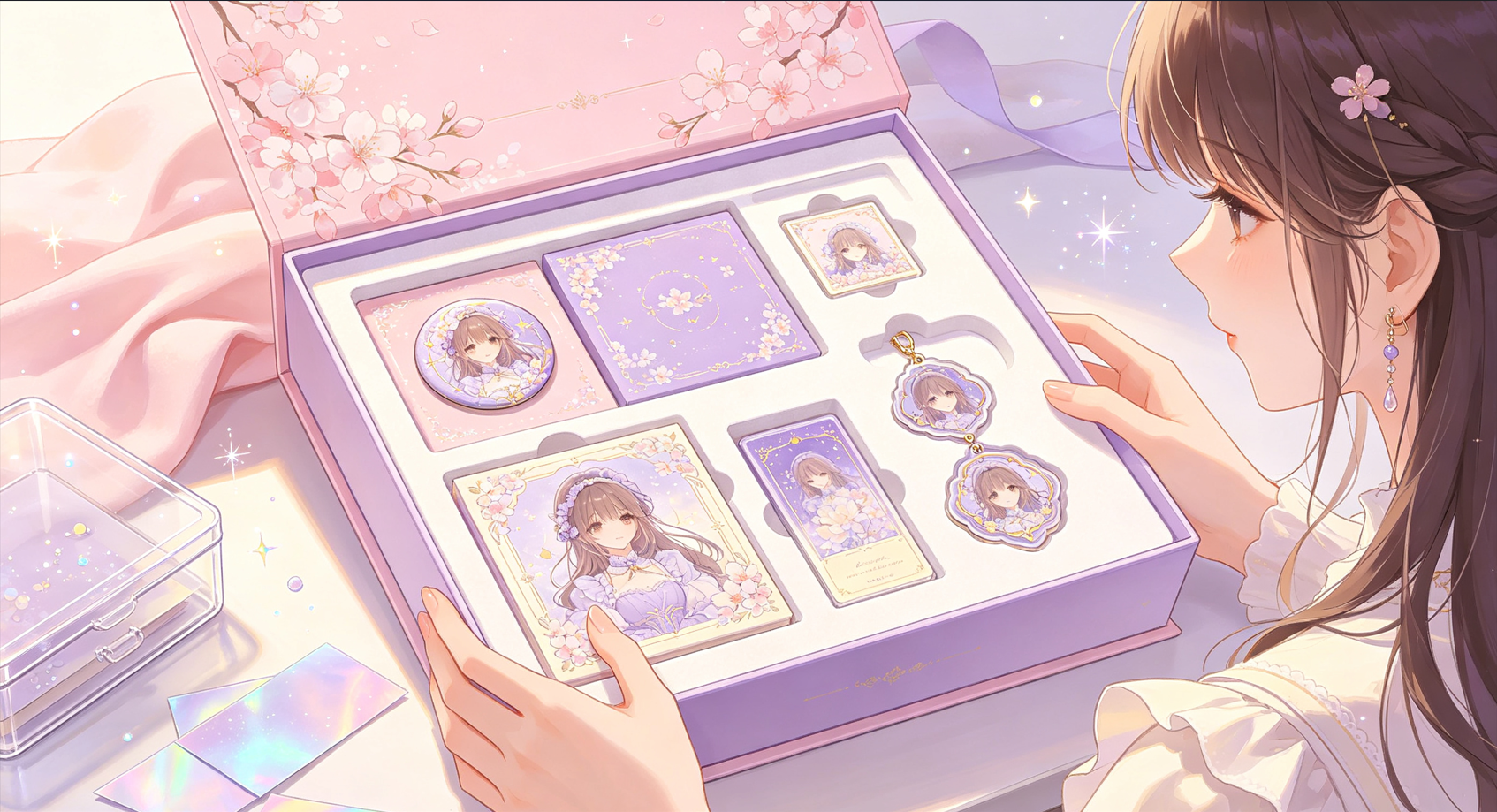
Real scenarios in the merchandise community: packaging boxes are used to store badges and small cards; gift boxes are cut and modified as journaling materials; holographic sleeves are used as decorations. The packaging lifecycle is artificially extended, no longer a disposable consumable.
Do not equate "collectible" with "the flashier the appearance, the better." The prerequisite for collectibility is a sturdy packaging structure and stable printing processes. If the box is easily crushed and the foil stamping rubs off at a touch, no matter how beautiful it is, users cannot keep it.
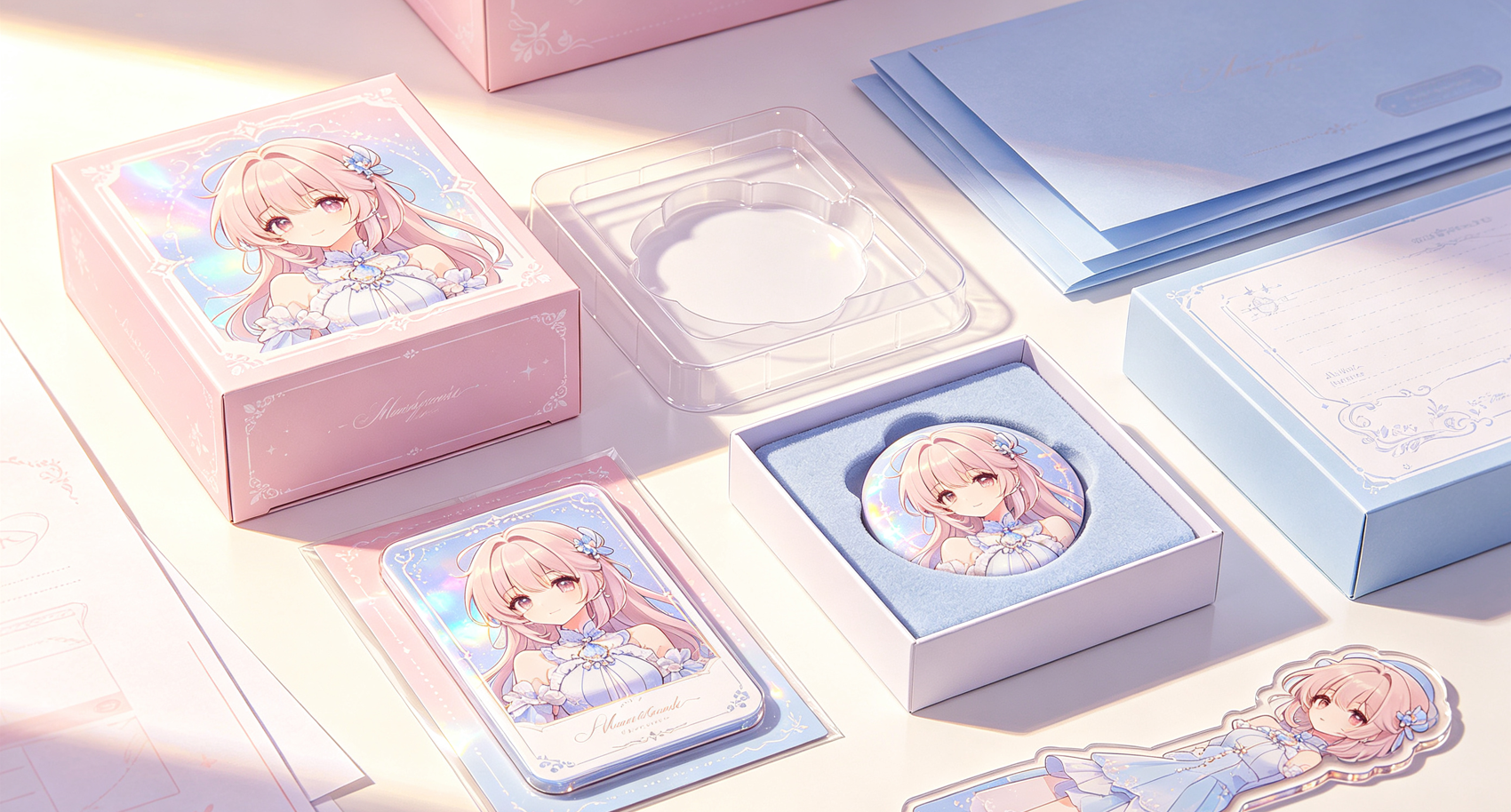
II. Technical Guide: What Hard Problems Must Packaging Design Solve for a "Collectible" Positioning
1. Paper Substrate: Balancing Stiffness and Long-Term Storage Stability
For ordinary FMCG packaging, 250g white card is sufficient; but for collectible-oriented ACG merchandise packaging, paper needs to balance bending resistance and aging resistance.
- 280‑350g high-bulk white card: Mainstream official IP merchandise gift boxes and card boxes. Excellent stiffness, not easily damaged from repeated opening and closing, suitable for long-term storage.
- Gold/silver card paper: Visually gorgeous, but in humid storage environments, the surface metal layer easily oxidizes and turns gray. Use caution with large-area gold/silver card for outer boxes of collectible-oriented products.
- Grey board rigid boxes: Top choice for limited sets and gift boxes, with the strongest deformation resistance; drawbacks are increased weight and cost, and increased volumetric weight for cross-border logistics.
Key knowledge point: Collectible-grade packaging must consider long-term storage. Paper with excessively high recycled content tends to yellow and become brittle after 1‑2 years; for limited-edition collectible items, paper with high virgin wood pulp content should be prioritized.
2. Process Trade-offs: Which Processes Are Suitable for "Long-Term Kept Packaging"
Many flashy processes look stunning short-term but cannot withstand long-term storage, making them unsuitable for collectible-oriented packaging.
| Process | Visual Effect | Long-Term Storage Risk | Recommendation for Collectible Projects |
|---|---|---|---|
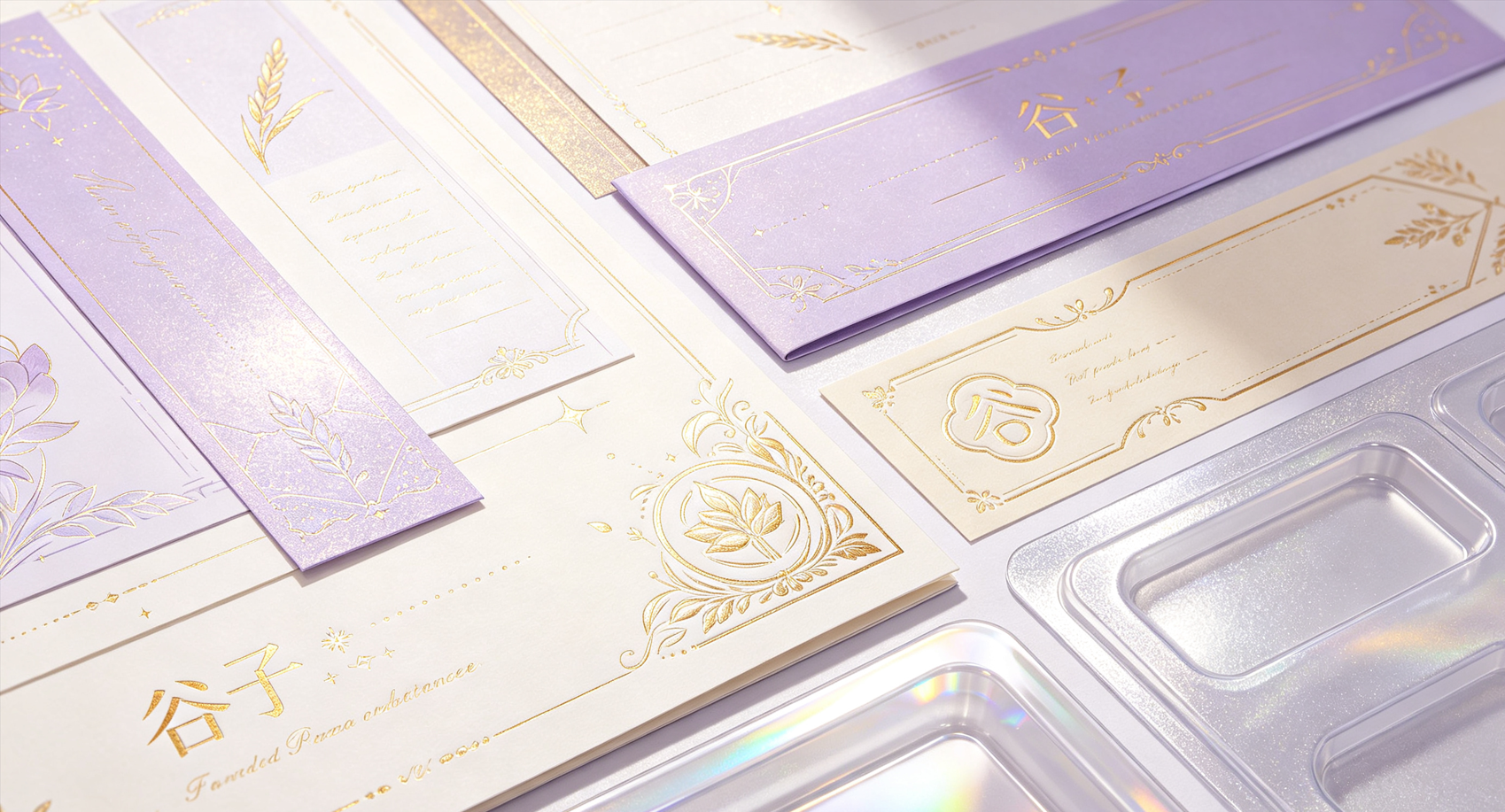
| Standard hot foil stamping (gold/silver) | Metallic luster | Foil rubs off with friction, oxidizes and darkens in humid environments | Prioritize small-area logos and patterns; avoid full-surface large-area foil stamping |
| Holographic foil stamping | Dazzling iridescent reflection | Coating wears off, localized holographic effect disappears | Use as localized accents, not full-box coverage; always conduct abrasion resistance testing |
| Spot UV | Raised texture | Thick UV layer becomes brittle and cracks over time | Use thin UV, only on key graphic areas |
| Embossing/debossing | Three-dimensional feel | Embossing on thin paper causes paper cracking at fold lines | Use with ≥300g thick paper |
| Laminated holographic film | Rainbow iridescent effects | Film layer lifts and delaminates, worsened by moisture | Strictly control lamination temperature and humidity in mass production; minimize use for small-batch doujin products |
3. Inner Packaging Materials: Protect the Product and Accommodate Long-Term Storage
- Flocked blister: Protects metal badges, prevents paint surface scratches. Note: choose low-migration flocking; inferior flocking sheds fibers that adhere to badge surfaces over time, causing irreversible stains.
- PET protective film: Factory protective film for acrylic and quicksand products; distinguish high-tack, medium-tack, and low-tack. If high-tack film is left on printed surfaces for months before removal, there is a risk of ink being pulled off; collectible-oriented products must specify medium-to-low tack PET protective film.
- Interleaving paper, liner paper: Do not use acidic ordinary copy paper in direct contact with metal badges for extended periods; acidic paper causes badge paint oxidation and discoloration. For high-value merchandise, use acid-free interleaving paper.
4. Print Files: Design Adaptation for Long-Term Preservation
- Print files should use CMYK mode; high-saturation RGB colors on screen typically appear darker in physical printing.
- For large-area dark printing, ink thickness should not be excessive; thick ink layers are prone to smudging and show-through during storage.
- Gloss lamination gives more vivid colors; matte lamination offers a softer texture but relatively weaker abrasion resistance. For long-term collectible storage, gloss lamination options should be prioritized for evaluation.
III. New Contradiction: Emotional Collectibility Needs Collide with Global Packaging Environmental Regulations
This is currently a major pain point for domestic ACG merchandise going overseas. As global packaging regulations tighten, a new balancing challenge is emerging between users' expectations for collectible ritual and environmental regulations.
Users expect multi-layer gift boxes, dazzling holographic effects, and flocked liners to achieve a collectible ritual experience; but overseas regulations focus on packaging reduction, material recyclability, and hazardous substance restrictions. The two are not entirely opposed, but require advance planning at the design stage.
Industry Practical Solutions
- Differentiate version planning: Domestic versions can retain more elaborate collectible processes; export versions should prioritize PET eco-friendly blister and simplified lamination processes to reduce compliance risks.
- Control packaging layers: Do not add meaningless multiple outer box layers; the sense of ritual can be transferred to printing, structural creativity, and storage experience.
- Pre-test materials: Materials such as glow-in-the-dark inks and special foil stamping pigments should have heavy metal and hazardous substance testing confirmed in advance.
- Design as reusable containers: Design outer boxes as long-term usable storage boxes, transforming packaging from "disposable" to "continuously used," balancing emotional value and environmental logic.
IV. Pitfall Avoidance Summary: Four Core Principles for ACG Collectible-Oriented Packaging
- Protection always comes before aesthetics. No matter how beautiful the box, if it cannot protect the merchandise inside and gets damaged during shipping, collectible value is out of the question.
- Conduct time-dimension testing. Proofing should not only look at immediate effects but also simulate long-term storage environments to observe whether paper, ink, and foil will oxidize or delaminate.
- Distinguish between small-batch doujin and official mass production. Small-batch orders should not blindly adopt complex processes, otherwise defect losses will erode profits; only official limited editions should consider higher-cost material combinations.
- Plan domestic and export markets separately. Domestic and export versions should not simply share the same packaging set, to avoid customs clearance and sales issues caused by material or structural problems.
V. Industry Observation Outlook
The domestic IP market continues to grow, with notable increases in guofeng-themed and original ACG merchandise consumption. In the future, ACG packaging will no longer be merely an accessory to merchandise but will become a front-end design element in IP planning.
A mature development process should integrate packaging solutions simultaneously at the very beginning of IP derivative product planning: box type, materials, processes, storage experience, and compliance conditions should all be evaluated together. Only by building emotional value on stable structures and reliable supply chains can packaging truly possess the collectible vitality of "can't bear to throw away."
Next Issue Preview
In the third issue of this column, we focus on the practical implementation of green materials in ACG IP packaging: how biodegradable paper and recycled materials can achieve holographic, foil stamping, embossing, and other high-aesthetic effects; breaking down the capability boundaries of eco-friendly materials, balancing merchandise community aesthetics with sustainable packaging trends.
Related Articles
Skills and Artistry at the World Skills Competition
From September 22 to 27, the 48th WorldSkills Competition was held in Shanghai. What noteworthy highlights does this "Skills Olympics" hold that are worth a closer look for the design, art, and packaging industries?
The "Green Ongoing" of Packaging: A Week of Sustainable Packaging Observations
Wuhan Sustainable Packaging Innovation Exhibition concludes today; "Bamboo as a Substitute for Plastic" included in the "15th Five-Year Plan" outline; Nine Dragons and Shanying issue post-holiday price increase letters. From materials to processes, green is becoming the default option for packaging delivery.